North America · March–April 2019
The Yucatán: Mérida, Tulum, and Cancún in Ten Days
Colonial Mérida, cenotes and ruins near Tulum, and an all-inclusive finish in Cancún.
Before you read on
North America · March–April 2019
Colonial Mérida, cenotes and ruins near Tulum, and an all-inclusive finish in Cancún.
Our March–April 2019 trip through the Yucatán Peninsula moved between the well-known Riviera Maya coastline and the quieter colonial interior, starting in Playa del Carmen, cutting inland to Mérida, then swinging back to the coast at Tulum before finishing in Cancún. It’s a route that gives you both halves of what the Yucatán is known for — the resort-and-beach identity most people picture, and the older, more distinctly Mexican identity that the coastal towns don’t really show you.
We began at La Divina by Aldea Thai in Playa del Carmen, using it as a comfortable landing point before heading further afield. Playa functions as one of the main hubs of the Riviera Maya, with easy access both to the coast itself and to the roads heading inland, which made it a sensible place to acclimatize before the rest of the trip got more varied.
From Playa del Carmen we drove inland to Mérida, the colonial capital of Yucatán state, where we stayed at Hotel Hacienda Mérida. Mérida is a genuinely different experience from the resort coast — a city built around a well-preserved colonial core, with a calmer, more local pace than anywhere on the Riviera Maya. Rather than beach clubs and all-inclusive buffets, Mérida gave us plazas, colonial-era buildings, and the sense of being in a real working Mexican city rather than a stretch of coastline built for tourism. If a Yucatán trip only hits the coast, it misses a real piece of what the region is — Mérida is worth the inland detour on its own merits.
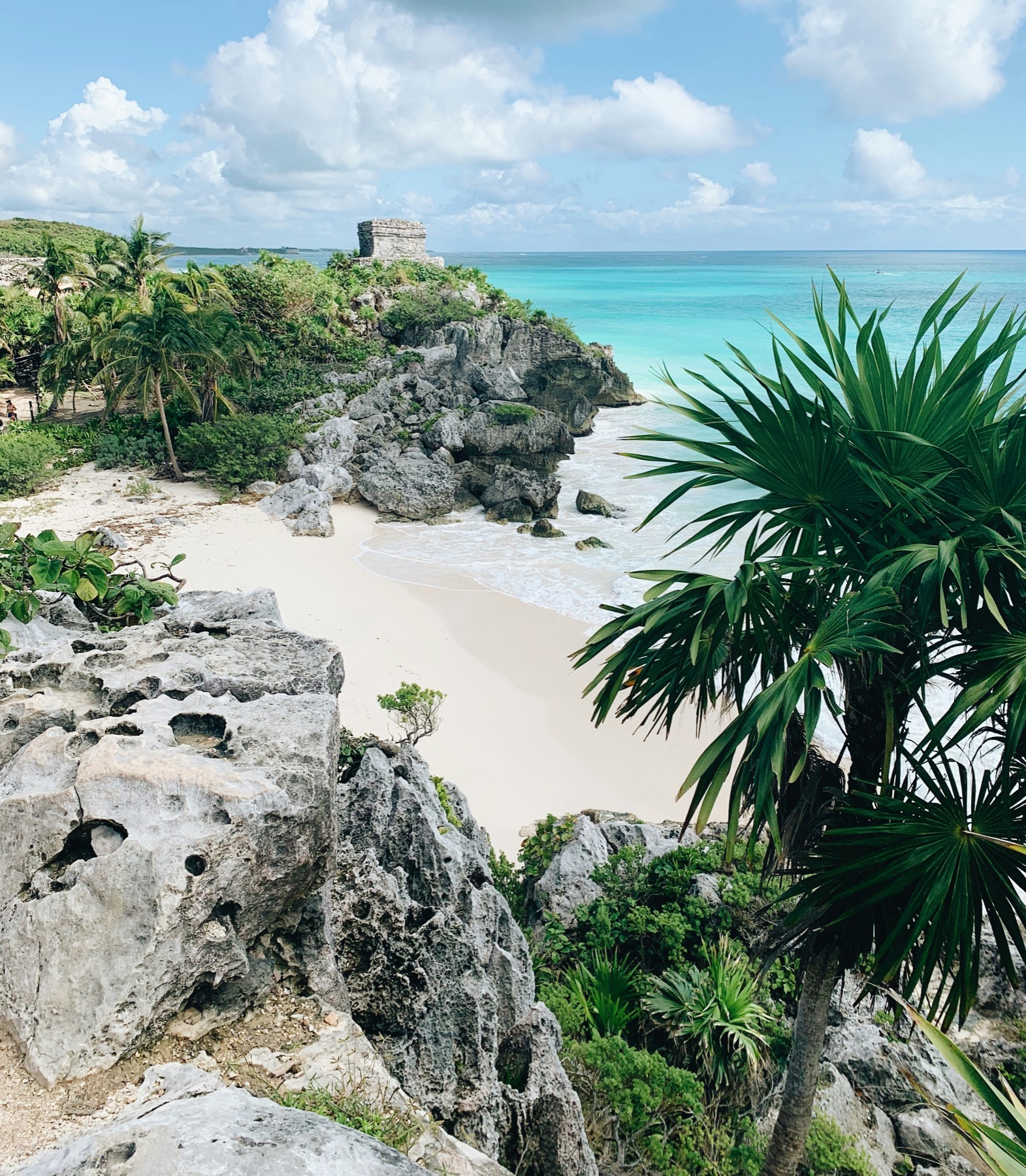
From Mérida we headed back toward the coast to Tulum, staying in a high-end two-bedroom condo through Happy Address. Tulum is famous for one thing in particular that’s genuinely unusual in the Mayan world — its ruins sit directly on a clifftop above the beach, one of very few Mayan archaeological sites built right on the coastline rather than inland in the jungle. Beyond the ruins themselves, the area around Tulum is dense with cenotes, the limestone sinkholes that define this part of Mexico’s geology, many fed by underground rivers that keep the water remarkably clear. Cenote swimming is a genuine regional highlight and worth setting aside a full day for rather than squeezing in as an afterthought — many of the best ones require a guide or sit on private land with their own entry fee, so it’s worth planning which ones you want to see rather than just showing up.
We closed the trip in Cancún at the Grand Park Royal Cancún, All Inclusive, which gave us exactly what an all-inclusive resort finish is meant to give you after ten days of moving around — beach chairs, no more packing and unpacking, and a few days of doing very little. Cancún’s resort zone is the version of the Riviera Maya most people picture, and it made sense as a decompression stop before flying home rather than as a place we explored extensively beyond the resort itself.
The logic of pairing Mérida with the coast is really about contrast: the Riviera Maya gives you postcard beaches and polished resorts, while Mérida gives you colonial architecture, a slower local pace, and a sense of Yucatán life away from the tourism corridor. Doing both in one trip, rather than picking one or the other, gave us a much fuller picture of the peninsula than sticking to the coast alone would have.
Renting a car makes real sense for the Mérida-to-coast portion of a trip like this, given the distances involved and the flexibility it gives you to stop at cenotes along the way rather than being tied to organized tours. The Yucatán runs hot and humid for nearly the entire year, so pack accordingly regardless of which month you go, and build in shade and water breaks particularly around midday when visiting ruins with little natural cover.
[Editor’s note: add what this trip actually meant to you both — the cenote swims, the contrast between Mérida and the coast, whatever stuck with you — and swap in your own photos when ready.]
Planning a similar trip?
Compare hotel prices and flight options before you lock in dates — same sites we actually use.
Booking.com
The broadest hotel and apartment inventory worldwide, free cancellation on most rooms.
Kayak
Our go-to for comparing flight prices and setting price-drop alerts before booking.
Discover Cars
Consistently the best-value car rental comparison site for international trips.